The Council will propose changes to the General Plan (Land Use Policies 3.10 & 3.12.5) to require zoning changes and General Plan Updates to be approved by a public vote providing the community with a greater voice in our future. This will fulfill the spirit of Proposition A -- the right to vote on upzoning.
Showing posts sorted by relevance for query Prop A. Sort by date Show all posts
Friday, May 17, 2013
Encinitas Council Not Poised to Adopt the REAL Spirit of Prop A
Prop A makes deciding on upzoning a right of the voters, and makes it is so the council can’t take that right away. The last part is essential to the spirit of Prop A.
We can’t know if that last part is one of the things Mayor Barth sees as a negative because she is keeping her comments vague. She refuses to answer the question: What are the negatives of Prop A? It deeply matters what is on her list. Without that list you don’t know if she is going to give the public the 10% of Prop A that they actually care about, or leave that out, if Prop A fails.
If Prop A fails you might not even get even 10% of what is in Prop A. In fact, you might get a bunch of stuff you didn’t want.
Let’s review. This is what the council committed to in writing:
The spirit of Prop A was to make it a RIGHT of the voters to vote on upzoning and make that RIGHT irrevocable by council action. It doesn’t look like the council is moving on the second part. The essential part. Without the second part, why bother with the first part? What’s the benefit?
According to one senior city official, what the council will be voting on next week WILL NOT result in the proposed changes going to the voters to be ratified, and thus their changes will not be immune from future council changes (via a 3/5th majority). The spirit of Prop A WILL NOT be fulfilled by the council without the council setting a new course.
Prop A makes a substantive change, in that it cannot be overturned on some random Wednesday night when nobody is watching. You say that won’t happen? How many people know that the council, including Barth, overturned your right to vote on city borrowing on long-term debt? The parallel is somewhat close, because that provision of the city management manual giving you that right was put in as a direct response the last time there was a serious voter initiative put in front of the council. There is widespread support for voter approval for bonding, perhaps even more than for voter approval of upzoning.
Because of all this, I consider what the council is doing next week as no better than symbolic. When Jerome was Mayor I wrote that he should spend his time on substantive changes rather than symbolic changes (ex: eminent domain “reform”), and made suggestions to that effect. To be fair, this council should work on substantive changes rather than symbolic changes that will not keep future councils from changing it back or weaseling in a NEW exception.
Unfortunately, what the city is poised to do may be worse than that. It may open the door for even easier action by the council on upzoning. Instead of affirming the right to vote in clear language the council decided to strike out the 4/5 exemptions from the GP. Why was this glaringly bad, immediately, to many lay observers? If you don’t replace it with language that prohibits NEW exemptions, it opens the door to new exceptions without having to overturn the current council's decision. Oh, this is just chicken little talk? Keep reading.
If you want an example of an exception that could be added that would be consistent with the strikeout of the 4/5th exemption, look at what has been proposed. The staff report for the PC review of the topic recommends the city add in an exemption to voter approval for compliance with state law. Translation: just about any upzoning that contains residential could EASILY be construed to fall under that exception.
THIS IS A BOMBSHELL! It gives a spectacular example of the obvious "flaw" of only striking out the exception.
Again, maybe this is just the way Mayor Barth wanted it. We can’t know if she keeps her list of negatives about Prop A secret.
Here is what people are saying to me: There is no way Encinitas City Manager Gus Vina would have allowed such a bold move without first checking in with Barth. Barth has a long history of "talking" to the CM about things she does and doesn't want to see happen, during her private meeting with him and other staff.
(I’d ask Gus directly but he's not answering questions. Barth isn’t either.)
We can’t know if what we are seeing is consistent with the Mayor’s desires or not, because she has kept her list of negatives secret.
To fulfill the core spirit of Prop A a statement has to be added that states that the VOTERS will get the final say, with no exceptions. That must be set up so the council can’t overturn it on a whim.
I would be satisfied if the council stated clearly what their goals were in creating their version of Prop A (that would sort of require being open about what they see as the negatives of Prop A) AND set a timeline for moving to get their version which gives the voters the last say with no exceptions, submitted to the registrar of voters.
A strikeout version of Prop A doesn't meet the spirit of Prop A. A resolution by the council to change the GP's exceptions doesn't meet the spirit of Prop A. Only a voter approved ballot measure that has language that affirms the rights of the voters meets the spirit of Prop A. If they did that, I would be so satisfied with that I would actively campaign against Prop A.
Don't forget, the Council promised to fulfill the spirit of Prop A, only they might be twisting the meaning of the spirit of Prop A to manipulate the public. We can’t adequately evaluate that until the Mayor tells us what parts of Prop A she sees as negatives, leaving the good parts to be adopted by the council and voters.
Note: I have not decided if I’m going to support Prop A or not. I’m waiting to see the Mayor’s list of negatives. Please don’t be surprised if I agree with the Mayor.
Monday, June 10, 2013
Scariest Prop A Thinking
The council has communicated to the public the general idea that upzoning hasn't happened in the past without a public vote. The intention is clearly to make the public believe there is no risk of future changes to our city without a public vote by the people. What happened our city's relative short history doesn't change the fact that the system allows for upzones to happen without a vote of the people. Further, then why be opposed to putting upzoning to a vote of the people in a way that ensures that right can not be retracted or overridden by a future council by just 3 votes?
The Right to Vote people say that upzoning has happened without a vote of the people. Many people don't trust the council now.
There is a real risk and the council and their handlers know the public wants the right to vote on the future of their city. That's why the No on Prop A campaign's tag line is "its not what it seems" or something like that. They have to make people believe that Prop A won't give the people the last word on upzoning. This is probably because a vast majority of the public wants the last word on upzoning. The council also knows this, that is why the council came up with an alternative plan. Unfortunately, their alternative plan does not protect the public from future exemptions, but it sure sounded good until you look at what it is missing in Barth's version. Their version is the one that is not what it seems. After emails from me, Lisa has committed to closing that gaping loophole. After many emails from Tony has also capitulated to the need for closing the gap. That is only two council members and not a majority of the council.
In the ballot statements, SIGNED by the entire council, they write:
SANDAG has plans for mid rise buildings along El Camino Real. Those plans were construed in consultation with Encinitas City Staff. Discussions of higher buildings in Encinitas during the general plan update process is what got many of the R2V people motivated to pass Prop A.
The big whopper is the the claim that there "will not be" approved plans for 5 story buildings. No council can command a future councils to do or not do something beyond their tenure, much less forever. None of council majority should have signed that argument and walked away feeling clean. You don't even have to know any history to know that something smelled bad about that statement. They went way too far with that one.
The RTV people have been pointing out that the downtown specific plans added many hundreds of new units to the downtown area and raised height limits from two stories to three stories without a vote of the people. This conflicts with the spirit of the council's statements (unless the council was trying to sneak around this by playing with their words carefully so that they purposefully give an incomplete impression to the less informed public. "Major" is the weasel word used in this case.)
The council has been called out on this. In an EU comment Tony Kranz seems to make a circular argument that none of this stuff was needed to make sure that major changes and clarifies his unfortunate definition of major land use change.
From Council Member Tony Kranz:
In Tony's view "major" was whatever the council decided it was? Major land use change had nothing to do with the land use change being proposed and instead it was based on how many council members would vote for it? That's how they defined major land use change when they wrote the argument? Is this what the council said during deliberations (I don't think so)? Tony's statement looks much more like an after the fact attempt to find a way to justify the statement.
What do Lisa and Teresa have to say about this? Is it worse that they haven't defended these statements (to my knowledge).
Tony also points out that Prop A does defines major, as upzoning, period. He doesn't address the fact that his statement was made in the context of Prop A. Shouldn't they have been using the same definitions Prop A when making arguments about Prop A? Wouldn't it be misleading to have different definitions being used without telling the public this?
I know that at least one council member thought upzoning had not happened AT ALL without a vote. This person did not purposefully lie or weasel. The action was enabled by a deficiency of effort to check staff and willingness to go along with a much stronger argument against Prop A that sounded good.
I have almost no time to write or review any of this, but the circular logic takes no time to figure out. It was so obvious and strong I got a couple emails about it. Do your own fact checking, questioning of council, and post responses to comments section (I'm hoping that WC can follow up if I can't get to it).
The Right to Vote people say that upzoning has happened without a vote of the people. Many people don't trust the council now.
There is a real risk and the council and their handlers know the public wants the right to vote on the future of their city. That's why the No on Prop A campaign's tag line is "its not what it seems" or something like that. They have to make people believe that Prop A won't give the people the last word on upzoning. This is probably because a vast majority of the public wants the last word on upzoning. The council also knows this, that is why the council came up with an alternative plan. Unfortunately, their alternative plan does not protect the public from future exemptions, but it sure sounded good until you look at what it is missing in Barth's version. Their version is the one that is not what it seems. After emails from me, Lisa has committed to closing that gaping loophole. After many emails from Tony has also capitulated to the need for closing the gap. That is only two council members and not a majority of the council.
In the ballot statements, SIGNED by the entire council, they write:
THERE NEVER WERE, AND WILL NOT BE, APPROVED PLANS FOR 5-STORY BUILDINGS IN ENCINITAS. Major land use changes HAVE ALWAYS happened with a vote of the people and the Council is committed to codifying this practice.
SANDAG has plans for mid rise buildings along El Camino Real. Those plans were construed in consultation with Encinitas City Staff. Discussions of higher buildings in Encinitas during the general plan update process is what got many of the R2V people motivated to pass Prop A.
The big whopper is the the claim that there "will not be" approved plans for 5 story buildings. No council can command a future councils to do or not do something beyond their tenure, much less forever. None of council majority should have signed that argument and walked away feeling clean. You don't even have to know any history to know that something smelled bad about that statement. They went way too far with that one.
The RTV people have been pointing out that the downtown specific plans added many hundreds of new units to the downtown area and raised height limits from two stories to three stories without a vote of the people. This conflicts with the spirit of the council's statements (unless the council was trying to sneak around this by playing with their words carefully so that they purposefully give an incomplete impression to the less informed public. "Major" is the weasel word used in this case.)
The council has been called out on this. In an EU comment Tony Kranz seems to make a circular argument that none of this stuff was needed to make sure that major changes and clarifies his unfortunate definition of major land use change.
From Council Member Tony Kranz:
Prop A defines any upzoning as a major change, but the definition before was essentially this: if you couldn't get 4 out of 5 votes from the city council, it was major. I actually prefer having a more certain definition of what's major, as well as requiring a vote on any upzoning. That's why I voted to remove the 4/5ths exception.
In Tony's view "major" was whatever the council decided it was? Major land use change had nothing to do with the land use change being proposed and instead it was based on how many council members would vote for it? That's how they defined major land use change when they wrote the argument? Is this what the council said during deliberations (I don't think so)? Tony's statement looks much more like an after the fact attempt to find a way to justify the statement.
What do Lisa and Teresa have to say about this? Is it worse that they haven't defended these statements (to my knowledge).
Tony also points out that Prop A does defines major, as upzoning, period. He doesn't address the fact that his statement was made in the context of Prop A. Shouldn't they have been using the same definitions Prop A when making arguments about Prop A? Wouldn't it be misleading to have different definitions being used without telling the public this?
I know that at least one council member thought upzoning had not happened AT ALL without a vote. This person did not purposefully lie or weasel. The action was enabled by a deficiency of effort to check staff and willingness to go along with a much stronger argument against Prop A that sounded good.
I have almost no time to write or review any of this, but the circular logic takes no time to figure out. It was so obvious and strong I got a couple emails about it. Do your own fact checking, questioning of council, and post responses to comments section (I'm hoping that WC can follow up if I can't get to it).
Saturday, August 10, 2013
It doesn't take a "conspiracy" to ruin a city
A recent audit by the state Controller's office finds that Stockton's bankruptcy was the result not of corruption, but of incompetence and financial mismanagement. Beginning in the 1990's, Stockton went on a wild spending, debt, and pension binge, assuming that growth and development would eventually pay the bills. It didn't take Bell-style corruption or conspiracy to destroy the city.
Recently, at least two council members have separately used the word "conspiracy" in response to questions from the public about the process that led to the council's questionable (at best) ballot statements against Proposition A. Crying "conspiracy" is a common rhetorical technique to belittle and discredit an opposing point of view.
What is the "conspiracy?"
Here are the facts:
1. City Manager Gus Vina selected the notorious pro-development law firm Rutan & Tucker to write an "independent analysis" of Proposition A. Vina signed the contract on February 4, more than a week before the February 13 council meeting at which the council ordered the report. At the February 13 meeting, Vina and the Council avoided letting the public know that the firm had already been chosen and the contract signed. Council members have not criticized either the selection of Rutan & Tucker or the timing of the contract before the Council decision, and the Council has since unanimously reviewed Vina's overall performance as "excellent."
2. The Rutan & Tucker report was predictably biased against Proposition A and raised numerous "what-if" fears, the most significant of which have already been debunked by the Coastal Commission on bifurcation and the city's own Planning Department on residential height limits.
3. The Council wrote ballot arguments against Proposition A that included both outright falsehoods and further stretching of Rutan & Tucker's already tenuous speculative hypotheticals.
5. Council members now want to "move forward" from discussion of Proposition A without addressing the serious breakdown in trust that has occurred. In stark contrast to their campaign themes of open government, fair play, and transparency and trust, Mayor Barth and Council Member Shaffer are refusing to answer questions about the process that led to the Prop A debacle.
Questions and observations:
1. How did Vina know long before the vote that the Council would want to order an analysis rather than saving the taxpayers $300,000 and just adopting the initiative outright? It sure looks like everybody in City Hall was on the same page to kill Proposition A long before the discussion was held in an open, public Council meeting. Is that a "conspiracy?" If so, it's certainly not a very far-fetched one.
2. Why was no one on Council concerned that Vina had selected a law firm that was immediately recognized by the public as a notorious pro-developer firm? It looks like Council was happy to get a report that supported their position, regardless of its fairness or credibility.
3. Why couldn't the Planning Department have announced the same simple, clear interpretation of residential heights before the election that they did shortly after the election? That would have gutted one of the Council's primary fear-based arguments against Prop A.
4. Why did the Council resort to ballot arguments that seem pretty clearly dishonest by any objective reading? It looks like they were more concerned with winning than with providing voters with an honest discussion of the pros and cons. If there are true problems with Prop A, we never got to have an honest discussion about them.
5. Why did the Council fail to give us an alternative to Prop A that locked in the right to vote but removed whatever supposed flaws Prop A had? If there are flaws in Prop A, an alternative honestly discussed with the public likely would have won. It seems that Council never had any Plan B other than hoping the initiative wouldn't qualify and then hoping it wouldn't pass.
6. Who is in charge here, Vina or the Council? It certainly looks like Vina took the lead with the Rutan & Tucker contract, and then steered the Council right into a political box canyon, pitting the new majority directly against their own political base. Or did the Council really want it to play out just like this?
7. If council members are unwilling to discuss and learn from their mistakes on Proposition A, how can we be assured that the next controversial issue will be handled honestly and fairly?
Stockton's leaders, like Encinitas', dismiss criticism from citizens, prompting this quote from the president of the local taxpayers' group that may feel very familiar to Encinitans:
* * * * * * * * * * * * * * * * * * * * * * * * * * * * * * * *
Recently, at least two council members have separately used the word "conspiracy" in response to questions from the public about the process that led to the council's questionable (at best) ballot statements against Proposition A. Crying "conspiracy" is a common rhetorical technique to belittle and discredit an opposing point of view.
What is the "conspiracy?"
Here are the facts:
1. City Manager Gus Vina selected the notorious pro-development law firm Rutan & Tucker to write an "independent analysis" of Proposition A. Vina signed the contract on February 4, more than a week before the February 13 council meeting at which the council ordered the report. At the February 13 meeting, Vina and the Council avoided letting the public know that the firm had already been chosen and the contract signed. Council members have not criticized either the selection of Rutan & Tucker or the timing of the contract before the Council decision, and the Council has since unanimously reviewed Vina's overall performance as "excellent."
2. The Rutan & Tucker report was predictably biased against Proposition A and raised numerous "what-if" fears, the most significant of which have already been debunked by the Coastal Commission on bifurcation and the city's own Planning Department on residential height limits.
3. The Council wrote ballot arguments against Proposition A that included both outright falsehoods and further stretching of Rutan & Tucker's already tenuous speculative hypotheticals.
a) "THERE NEVER WERE, AND WILL NOT BE, APPROVED PLANS FOR 5-STORY BUILDINGS IN ENCINITAS..." In fact, nothing in the General Plan or any other governing document would have prevented future councils from approving 5-story buildings without a public vote. Prop A prevents that. And this is not just a hypothetical. Peder Norby proposed allowing 5-story buildings at the May 24, 2012 ERAC meeting, and got a positive reaction from the committee.4. After Proposition A passed, the Planning Department quickly resolved the residential height question exactly in accordance with the way the Prop A people said it was intended and should be read.
b) "Major land use changes HAVE ALWAYS happened with a vote of the people and the Council is committed to codifying this practice." In fact, both the Leucadia and Downtown Specific Plans increased building heights from two stories to three stories, and both were approved by the City Council without a public vote.
c) "Prop A [...] allows taller structures in existing developments. Imagine a 30-foot structure five feet from your property line." Here the council stretched Rutan & Tucker's speculative "could be interpreted," which was not adequately supported by any real argument or explanation, into an absolute certainty (which has since been falsified by the city's own Planning Department).
5. Council members now want to "move forward" from discussion of Proposition A without addressing the serious breakdown in trust that has occurred. In stark contrast to their campaign themes of open government, fair play, and transparency and trust, Mayor Barth and Council Member Shaffer are refusing to answer questions about the process that led to the Prop A debacle.
Questions and observations:
1. How did Vina know long before the vote that the Council would want to order an analysis rather than saving the taxpayers $300,000 and just adopting the initiative outright? It sure looks like everybody in City Hall was on the same page to kill Proposition A long before the discussion was held in an open, public Council meeting. Is that a "conspiracy?" If so, it's certainly not a very far-fetched one.
2. Why was no one on Council concerned that Vina had selected a law firm that was immediately recognized by the public as a notorious pro-developer firm? It looks like Council was happy to get a report that supported their position, regardless of its fairness or credibility.
3. Why couldn't the Planning Department have announced the same simple, clear interpretation of residential heights before the election that they did shortly after the election? That would have gutted one of the Council's primary fear-based arguments against Prop A.
4. Why did the Council resort to ballot arguments that seem pretty clearly dishonest by any objective reading? It looks like they were more concerned with winning than with providing voters with an honest discussion of the pros and cons. If there are true problems with Prop A, we never got to have an honest discussion about them.
5. Why did the Council fail to give us an alternative to Prop A that locked in the right to vote but removed whatever supposed flaws Prop A had? If there are flaws in Prop A, an alternative honestly discussed with the public likely would have won. It seems that Council never had any Plan B other than hoping the initiative wouldn't qualify and then hoping it wouldn't pass.
6. Who is in charge here, Vina or the Council? It certainly looks like Vina took the lead with the Rutan & Tucker contract, and then steered the Council right into a political box canyon, pitting the new majority directly against their own political base. Or did the Council really want it to play out just like this?
7. If council members are unwilling to discuss and learn from their mistakes on Proposition A, how can we be assured that the next controversial issue will be handled honestly and fairly?
* * * * * * * * * * * * * * * * * * * * * * * * * * * * * * * *
Stockton's leaders, like Encinitas', dismiss criticism from citizens, prompting this quote from the president of the local taxpayers' group that may feel very familiar to Encinitans:
"If only Stockton's leaders would listen and consider that someone else might have something worth saying."
Monday, July 29, 2013
Now, how does this jive with what the council allowed people to believe prior to Prop A?
Here is a letter to the coastal commission from the City of Encinitas (click link). Prop A people say this doesn't make the council look good.
https://docs.google.com/file/d/0B1wJWJxfrtmTZUtZOGNmc3YzQ0k/edit?usp=sharing
I don't really have time to digest this, but here is my immediate reaction (besides... that's no surprise).
Does the letter mean the city won't be broken into 2 planning regions, as we were warned about? I think it means the city WON'T be bifurcated. Hum...
And what does this mean?
As suggested, in cases where existing codes specify a different maximum height standard, the more restrictive standard will be applied. For example, certain structures are limited to a maximum height of 22 and 26 feet in our Zoning Ordinance and certain specific plans. These more restrictive standards shall apply.Does that mean I can't build a 30 foot accessory unit? The council wrote to every voter in Encinitas, "Imagine a 30-foot structure five feet from your property line [if Prop A passes.]"
Doug Long wrote that heights limits would be raised in residential neighborhoods if it passed. Of course, this sort of statement was an obvious and predicted result of the way the council proceeded with THEIR "independent" analysis and public statements they made about the negative parts of Prop A. To their discredit, the council wrote a signed statement that the heights could be raised. They did not say how that could happen, nor did their "independent" report. ALL FIVE signed on.
Did the council want the public to be misinformed? When Doug wrote his commentary in Coast News I emailed the mayor letting her know about how her statements had predictably evolved in the public debate. I had hoped she would make a statement that addressed this, as the council clearly was responsible for promoting this thinking. She emailed back saying she would not even comment on the issue (an issue she facilitated). She comments on lots of stuff all the time, but not on this.
If the council made a false statement in the ballot argument they could be sued, but wishy washy "coulds" can be spread without support (the public has to rely on their trust of the council). Had the council explained their statement or said it "would" increase heights then they would have been sued, and they would have lost. In that case they would have had to fight Prop A with legitimate concerns about Prop A (which were less scary to a majority and so would make winning less likely for the council). More on addressing legitimate concerns later.
The council avoided resolving contrived or real ambiguities, prior to the election. The did not want to put in the effort. Why? It turned out that it was better for their campaign now that there can be no more "coulds", assuming this letter is real. Prop A doesn't do all those scary things, apparently.
Several council members directly resisted having these issues clarified PRIOR to the vote (more later, I'll have to review emails). Some of the resistance was based on "the issue being too complex" and a court would have to decide explanation. I made the point that first the city would have to decide, BEFORE a court would ever hear it, so why not resolve things PRIOR to the vote, so the people would have good facts to work with? No good answers came for that, other than it will take some time, from one council member. Well, how much effort was put into making the decision to support the paragraph above (were there really any viable options)?
If it were so convoluted and difficult to figure out (was it?) why wasn't that deliberation and decision made in the public, especially if it took some judgement or put the city at risk?
Barth was recently asked via email why they didn't resolve these "issues" prior to the vote. She has not responded.
It appears to have been "decided" easily by staff without new legal assistance or review by the city council!
This is all assuming I am reading the paragraph from the letter correctly (gotta work).
The (genuine) worst parts of Prop A didn't get pumped up by the council because a lot of people would have actually said, heck I like that! Or said, "if that is the worst part, I'm all in!"
Most of the council's statement could not withstand scrutiny and that might explain why the Mayor Barth wanted to avoid discussing her reasons for opposing "The Right to Vote Initiative". She went so far as to imply that she was afraid it would be illegal for her to exercise her free speech rights (which she knows), as an obvious and terrible weak way to deflect questions about her reasoning behind her opposition.
It is one thing to disagree. Its another to thing when our leaders don't play fair.
Was this the fair play that the Mayor promised?
Sure, lets all move forward (like there is any alternative), but lets take stock of what has happened and figure out how not to make the mistakes were made during Prop A. What went down during Prop A needs to be reconciled and behaviors changed if the current council majority doesn't want to end up Guerinating.
Later, a discussion of the statements Pro A made about property rights.
Monday, June 17, 2013
Tony Kranz responds on ballot argument honesty question
This is solely the opinion of Council Member Tony Kranz, not speaking for anyone else on the council:
The current council's ballot argument looks like they were more interested in making a strong argument to persuade uninformed voters than in telling the truth.
My friend K.C. threw up a post on this weblog the other day that did what any blogger wants their writing to do: generate comments (173 so far, a record on his blog says W.C.). The title of the post was Scariest Prop A Thinking and went on, in many words, to express his opinion about what the council wrote in the arguments against Proposition A, and comments I had made on this blog. He ascribes motives to the council that I disagree with and feel pretty sure the rest of the council does as well.WCV comment: We thank Tony for continuing the dialogue with the public, and we wish other council members were as open to publicly discussing the initiative as Tony has been. However, we don't think this explanation changes the fact that, by any objective measure, the council lied to the public in its unanimous ballot argument against Prop A. The council stated,
So what was it that scared him so? One thing he wrote had to do with this comment I made in reply to a direct question from an anonymous commenter about the council's argument against Prop A:
Prop A defines any upzoning as a major change, but the definition before was essentially this: if you couldn't get 4 out of 5 votes from the city council, it was major.
This doesn't seem that scary to me. I would call it the representative democracy definition of whether up-zoning was "major" or not, since it was left to our elected representatives to consider the political impact of approving a land-use plan, as well as the community impact. In fact, this was true whether there was up-zoning on a project or not.
And it turns out that the thinking in the early 1990's was similar to what I wrote on the blog. Way back around the time former County Supervisor, Mayor and Council Member Pam Slater-Price voted to add the 4/5ths exception to our General Plan by amendment, the same logic was used in the City Council Staff Report for the meeting of 9/25/91. Here's an excerpt:
Based on testimony at the [Planning] commission hearing, the following options can also be considered:
e) Instead of specifically-defined exemptions, give the Planning Commission and Council disoretionary authority to determlne when items are exempt from voter-approval. All items would be subject to voter approval except when the commission and council determine an item is exempt. This option removes the difficulty of trying to specifically define "minor" changes; it also creates undefined discretion. Variation: define at least some of the circumstances or criteria under which Commission and Council would have discretion to exempt.
As mentioned, the council back then ultimately added the 4/5ths exception, which—in another display of representative democracy—the current council unanimously voted to remove, making direct democracy the final step in ALL future major land-use decisions.
However, Prop A isn't only about the right to vote. It also includes provisions that would cause existing specific plans to be amended and, in my opinion, that is not a good way to govern. These "secondary" amendments could easily have been avoided, as they were in the initiative that passed in Escondido, by specifying that the provisions of the initiative would only apply to future land-use planning documents.
Kevin also calls aspects of the city council arguments against Prop A scary. His opinion is that we used "weasel" words, and suggested that we should have written our arguments using language that fit the context of Prop A. Needless to say, I disagree. We wrote our arguments as a group, in open council sessions, doing our best to honestly describe what we thought were important points to make. But as E.B. White said, "The best writing is rewriting." In our case though, any rewriting would have required another meeting to re-agendize the subject, deliberate and hold another vote. The calendar didn't allow for that.
Now the calendar shows we're a day away from the special election which will decide Prop A. California's tradition of direct democracy will have made its mark on our community. Regardless of the outcome, we'll have a lot of work to do in order to move our city forward.
THERE NEVER WERE, AND WILL NOT BE, APPROVED PLANS FOR 5-STORY BUILDINGS IN ENCINITAS. Major land use changes HAVE ALWAYS happened with a vote of the people and the Council is committed to codifying this practice.In fact, large sections of the downtown 101 area were increased from two stories to three stories without a public vote. To argue that these changes were not "major" strains credulity. Apparently, no council until now, including the council that allowed the changes, has tried to make the claim that those changes weren't "major." In fact, as the Staff Report quote above shows, the earlier council specifically chose not to define "major" or "minor" but to give themselves the 4/5 vote exemption regardless of how "major" a change.
The current council's ballot argument looks like they were more interested in making a strong argument to persuade uninformed voters than in telling the truth.
Thursday, May 30, 2013
Council throws "Spirit of Prop A" and "right to vote" under the bus
"Meep. Meep."
In the council's early opposition to Proposition A, they focused on "unintended consequences" and legal flaws while insisting that they supported the "spirit of Prop A," and promising to provide an alternative that would achieve the spirit.
If that were honestly the case, the council could have proposed a simplified, alternative ballot measure for the November 2014 ballot with the alleged "flaws" stripped out. As we have pointed out before, a ballot initiative passed by voters is the only way to prevent future councils from upzoning without a public vote. The council's theatrics over the 4/5 exemption last week aren't worth the paper they are printed on unless they add a provision that prohibits NEW exceptions being added and this is protected by a ballot initiative. Without a ballot initiative, any future council can give itself any similar exemptions it wants. Without a provision prohibiting new exceptions, they can nullify the Spirit of Prop A with new exceptions so large you can drive a 5 story building through it.
So why does the council refuse to propose a clean, no-loopholes ballot initiative that fixes whatever flaws they see in Prop A? Indeed, both Mayor Barth and Councilmember Shaffer wrote in their latest newsletters that they were committed to a vote on the General Plan Update (which would be completely toothless), but did not even mention sponsoring a better "right to vote" initiative. Other council members have made clear in private conversations that there will be no "right to vote" initiative if Prop A fails.
If it is not clear to you by now, let us spell it out: Your council does not just oppose the details of Prop A. Your council is, apparently unanimously, opposed to the very principle of a public right to vote on upzoning.
UPDATE: Since publication of this post, Council Members Shaffer and Kranz have indicated support for a legitimate, alternative right-to-vote initiative. However, this still leaves them in a 2-3 minority on the Council, meaning for the public, it's Prop A or no right to vote on upzoning at all.
Sunday, June 2, 2013
Heights Under Encinitas Prop A
Here is Ehler's explanation of the height issue:
HEIGHT EXPLANATION
(italics are quoted directly from Proposition or code)
Proposition A’s wording says “6.1 Maximum Height … no building or structure shall exceed (emphasis added) a maximum height of two stories or 30 feet.” It does not delete or reset the definitions of the other lower height limits whether for residential, accessory structures or steep slop lots. It only supersedes sections of code it is in conflict with. The initiative wording does not conflict with those other sections defining lower height limits for residential units, accessory units or residences in >10% sloped lots. It therefore does not supersede them.
The current General Plan height policy is POLICY 7.10. It reads “Both residential and non-residential development shall be limited to a maximum height of two stories and 30 feet.” The wording of the existing General Plan and Proposition A intentionally have very similar wording limiting height to a maximum height of two stories and/or 30 feet.
The claim by our opponents that the initiative’s wording is ambiguous yet the General Plan’s similar wording is not ambiguous or conflicting does not make sense. We believe the wording is clear that “no building or structure shall exceed a maximum height of two stories or 30 feet.” How much clearer could it be?
Opponents claim Proposition A’s definition conflicts with the lower height definitions in the residential, accessory and >10% sloped lot code sections and therefore supersedes them. Each of the height definitions from these sections is quoted below. Decide for yourself if they are in conflict. We believe it is clear and doesn’t conflict with either the General Plan or Proposition A definitions.
Residential height is defined in section 30.16.010B6. It reads “B. ALL RESIDENTIAL ZONES … The standard height limit shall be the lesser of two stories or the following height … 26 ft … 22 ft … ” This wording is not in conflict with the existing GP height policy and it does not exceed the initiative’s maximum height. It therefore is not in conflict and is not superseded by the initiative.
Accessory unit height is defined in section 30.16.010E3. “Said accessory unit structure shall be limited to one story and 12 feet in height.” Again this does not conflict with the initiative wording and therefore stands.
Residential units on greater than 10% slope lots are defined in section 30.16.010B6a(1). It reads “On lots in R-3 to R-25 zones with greater than ten (10) percent slope, the building height on the uphill side of the lot shall not exceed twelve (12) feet above the crown of the right of way.” This too does not conflict with the initiative’s wording. Since it does not conflict, it stands and the lower limit stays in force.
The current General Plan and zoning code treats each of these height limits separately and distinctly. By state law, the Municipal Code (which includes the zoning and height code) cannot be in conflict and must be consistent with the General Plan (our City’s “constitution.”) Therefore today, the General Plan and zoning code height definitions are not in conflict. Today no one is saying the General Plan limit should be applied everywhere. The initiative wording does not change this treatment and leaves each unique lower height definition unchanged.
The initiative only puts a maximum height above which no building or structure can exceed. To exceed 30 feet / two stories would require a further vote of the people to modify both the initiative’s maximum and other zoning provisions defining other currently applicable height limits.
KMC notes: I had delayed many times calling together the Encinitas Project (Wagner and I organized the first meeting). We delayed because I was deeply uncomfortable with the very mixed signals that Barth was giving regarding being involved in any grassroots policy development. In the end, she successfully avoided meaningful participation. When Wagner and I finally called the Encinitas Project together we proposed a method for drafting initiatives. That process included public meetings and consultations with staff and council. The successors of the Encinitas Project did not adopt that route. It opened the door for the city council to do what they have done, which was predicted. I recommend an open drafting processing next time.
It was also dumb to include a provision in Prop A that directly impacts the specific plan areas by FUNCTIONALLY lowering some sites' max height, because it allows for the issue to be muddied. More on that later.
The council allowed for ambiguity on height to expand during their review of Prop A. They say heights "could" be raised in residential zones. Some council members say a judge has to decide. That is incomplete. First, the city has to decide how the statute will be constructed, distinctly before any judge could weight in. Why didn't they decide that before the election so that the public would know how it will be interpreted by the city? They should have. It was not fair play to not have done so. A judge couldn't be involved until AFTER the city implements Prop A. Importantly, if it did go to court after passing and if it was ambiguous then how is the court going to decide what the voters wanted?
I had to get a crash course in statutory construction when I was on the SANDAG transnet oversight board, with the help of a couple local attorneys. Based on what I learned then, a judge is certainly going to look at what is in the sample ballot & voter information pamphlet, if she is going to decide what prop a means.
By having to work though the TransNet ordinance I learned how important it is for the goals of each section to be specified in the ordinance itself. The drafters of the RtV initiative did not do that enough. Their response on this particular situation is that the plain language is obvious to anyone familiar with planning law. Well, the voters are voting on this, not planners.
The council also holds a big share of responsibility for any ambiguity if the plain language is not enough. How is that? If the council had wanted to work on clarifying the interpretation they could have, by stating how they would execute Prop A upon its passage. They could have worked on that more but it probably did not occur to them (a majority) because they were not in favor of the spirit of prop A anyways and staff had procured a report that kicked up dust rather than being illuminating on this subject. Instead, they helped crack the door open on the ambiguity. I believe that was done as part of the effort to defeat Prop A, and its genesis was not impartial.
It was a good cover for the Mayor. It helped the Mayor avoid having to tell the public that she really doesn't support giving the people the right to vote on upzoning, protected with voter approval and locking out new exceptions (I'lll be publishing her direct statement in the next day or so).
The right to vote people teed this up and the council swung at it. It is a sideshow compared to the meat of the important public policy judgements that the Mayor had tried to hide from. Should the council have the last vote on upzoning or should the voters?
HEIGHT EXPLANATION
(italics are quoted directly from Proposition or code)
Proposition A’s wording says “6.1 Maximum Height … no building or structure shall exceed (emphasis added) a maximum height of two stories or 30 feet.” It does not delete or reset the definitions of the other lower height limits whether for residential, accessory structures or steep slop lots. It only supersedes sections of code it is in conflict with. The initiative wording does not conflict with those other sections defining lower height limits for residential units, accessory units or residences in >10% sloped lots. It therefore does not supersede them.
The current General Plan height policy is POLICY 7.10. It reads “Both residential and non-residential development shall be limited to a maximum height of two stories and 30 feet.” The wording of the existing General Plan and Proposition A intentionally have very similar wording limiting height to a maximum height of two stories and/or 30 feet.
The claim by our opponents that the initiative’s wording is ambiguous yet the General Plan’s similar wording is not ambiguous or conflicting does not make sense. We believe the wording is clear that “no building or structure shall exceed a maximum height of two stories or 30 feet.” How much clearer could it be?
Opponents claim Proposition A’s definition conflicts with the lower height definitions in the residential, accessory and >10% sloped lot code sections and therefore supersedes them. Each of the height definitions from these sections is quoted below. Decide for yourself if they are in conflict. We believe it is clear and doesn’t conflict with either the General Plan or Proposition A definitions.
Residential height is defined in section 30.16.010B6. It reads “B. ALL RESIDENTIAL ZONES … The standard height limit shall be the lesser of two stories or the following height … 26 ft … 22 ft … ” This wording is not in conflict with the existing GP height policy and it does not exceed the initiative’s maximum height. It therefore is not in conflict and is not superseded by the initiative.
Accessory unit height is defined in section 30.16.010E3. “Said accessory unit structure shall be limited to one story and 12 feet in height.” Again this does not conflict with the initiative wording and therefore stands.
Residential units on greater than 10% slope lots are defined in section 30.16.010B6a(1). It reads “On lots in R-3 to R-25 zones with greater than ten (10) percent slope, the building height on the uphill side of the lot shall not exceed twelve (12) feet above the crown of the right of way.” This too does not conflict with the initiative’s wording. Since it does not conflict, it stands and the lower limit stays in force.
The current General Plan and zoning code treats each of these height limits separately and distinctly. By state law, the Municipal Code (which includes the zoning and height code) cannot be in conflict and must be consistent with the General Plan (our City’s “constitution.”) Therefore today, the General Plan and zoning code height definitions are not in conflict. Today no one is saying the General Plan limit should be applied everywhere. The initiative wording does not change this treatment and leaves each unique lower height definition unchanged.
The initiative only puts a maximum height above which no building or structure can exceed. To exceed 30 feet / two stories would require a further vote of the people to modify both the initiative’s maximum and other zoning provisions defining other currently applicable height limits.
It was also dumb to include a provision in Prop A that directly impacts the specific plan areas by FUNCTIONALLY lowering some sites' max height, because it allows for the issue to be muddied. More on that later.
The council allowed for ambiguity on height to expand during their review of Prop A. They say heights "could" be raised in residential zones. Some council members say a judge has to decide. That is incomplete. First, the city has to decide how the statute will be constructed, distinctly before any judge could weight in. Why didn't they decide that before the election so that the public would know how it will be interpreted by the city? They should have. It was not fair play to not have done so. A judge couldn't be involved until AFTER the city implements Prop A. Importantly, if it did go to court after passing and if it was ambiguous then how is the court going to decide what the voters wanted?
I had to get a crash course in statutory construction when I was on the SANDAG transnet oversight board, with the help of a couple local attorneys. Based on what I learned then, a judge is certainly going to look at what is in the sample ballot & voter information pamphlet, if she is going to decide what prop a means.
By having to work though the TransNet ordinance I learned how important it is for the goals of each section to be specified in the ordinance itself. The drafters of the RtV initiative did not do that enough. Their response on this particular situation is that the plain language is obvious to anyone familiar with planning law. Well, the voters are voting on this, not planners.
The council also holds a big share of responsibility for any ambiguity if the plain language is not enough. How is that? If the council had wanted to work on clarifying the interpretation they could have, by stating how they would execute Prop A upon its passage. They could have worked on that more but it probably did not occur to them (a majority) because they were not in favor of the spirit of prop A anyways and staff had procured a report that kicked up dust rather than being illuminating on this subject. Instead, they helped crack the door open on the ambiguity. I believe that was done as part of the effort to defeat Prop A, and its genesis was not impartial.
It was a good cover for the Mayor. It helped the Mayor avoid having to tell the public that she really doesn't support giving the people the right to vote on upzoning, protected with voter approval and locking out new exceptions (I'lll be publishing her direct statement in the next day or so).
The right to vote people teed this up and the council swung at it. It is a sideshow compared to the meat of the important public policy judgements that the Mayor had tried to hide from. Should the council have the last vote on upzoning or should the voters?
Monday, June 17, 2013
Major Issue
-->
I wrote about a document read by a wide majority of voters in Encinitas. It contained
statements that seemed indefensible. It was signed by each member of the city
council. They make the decision to sign the statement individually.
Many of the statements
were questionable or indicated ambiguity that was facilitated by the city. On
several counts they could have worked to reduce confusion over the ambiguity. They instead let it roll.
On the other side, the door for this was
left open by the drafters of Prop A.
I’ve worked on
several ballot statements. The people I’ve worked with have expressed extreme
concern for one thing above all. It was not winning. Accuracy was their primary
concern.
The scariest thing
about Prop A was that it demonstrated that we do not have a council that will
actively avoid group think, the quest for accuracy is not supreme, and as a group they will plant their flag on top of superficial fixes.
___
It was reported to me
that on Wednesday, Andrew Audet asked the city council how they could state
that 5 stories would NEVER be built in Encinitas. They put their signature on
that and it got sent to every voter in Encinitas. That, along with a lot
of other statements, were of questionable veracity or completeness.
Apparently the
Mayor did not want to explain the factual basis
for that statement to Mr. Audet at the council meeting. Statements of fact in
response to oral communications to council have occurred many times over the
last few years. I don’t recall hearing the Mayor opposing that activity. It is not against the law. I emailed the Mayor on Friday asking her
when would be a good time for Mr. Audet’s question to be answered. No response.
Looks like she is willing to win by foul play, instead
of fixing her statements.
It is scary that the
new council majority went along for this ride. Tony did not address the
question about 5 stories either, other than stating:
“We wrote our arguments as a group, in open council sessions, doing our best to honestly describe what we thought were important points to make”
Each council member
individually signed off. One single council member could have likely shot down
the inaccuracies or seen that they never developed by simply asking that they have an approach
that ensured that they didn't include inaccurate statements being sent to the voters.
One council member has a huge influence. One single hold out makes it so that
the rest can’t claim that she was just going along with the group.
On the statement that made a lot of people think the 4/5th exemption had not been used, Tony pulls out a
quote from one of the options from a STAFF report to explain away the circular
reasoning. I’ve not looked at the staff report. I don’t see how it can be
relevant.
Tony writes, “if you
couldn't get 4 out of 5 votes from the city council, it was major.” The law
doesn’t say that. The law talks about significant public benefit.
Here is the
exception. I think this is what the council actually approved (this is from my records, and I'll double check a little later when I have more time... the city website is a major deterrent when you have a life):
It does not say
anything about "major". Tony doesn’t explain where in the law “major” matters.
Can anyone explain that to me?
Instead, what it says
is that the council gets to decide what is a significant public benefit. THEY
GET TO DECIDE. It is plain; there is no
reason to try to figure out what that means, its obvious.
If the council had
adopted the option that Tony described, it would still be circular. No upzoning, even 2,000 additional units (maybe with a big city park as a public
benefit) would not be “major” according to Tony’s explanation. This defies
common sense and is thus misleading (if it were true).
The council also told
the voters they supported Prop A and implied they would give the voters the
right to vote on upzoning. Tony wrote, “the
current council unanimously voted to remove, making direct democracy the final
step in ALL future major land-use decisions.”
As I warned multiple council
members before they did it, what the council did might be only temporary EVEN if ratified
by the voters. I pressed them to add a statement stating that no new exceptions
could be added or simply affirming the right to vote. What they did is a phony version of Prop A, because it only
takes a 3/5th majority to add a new exception allowing the voters to
by bypassed. The Mayor is refusing to state that she subscribes to the CENTRAL
and KEY feature of Prop A where a future council can not a new exception back
in. Why did they leave that out? Why won't the Mayor say if she would support that addition?
Along with allowing the
city to use the PWY as collateral for
the park bonds, failing to follow through with getting a minimally adequate pension analysis,
and the council’s approach to the "Spirit
of Prop A", I’m scared that we aren’t going to see much substance out of this council. That’s
what scares me.
Saturday, February 22, 2014
Taxpayer-funded "Encinitas 101" still pushing to gut Prop A, impose 3 stories
This Wednesday's council meeting will feature a presentation on economic development by a group including the city, the Chamber of Commerce, and the Cardiff, Encinitas, and Leucadia 101 merchant associations.
In an unorthodox arrangement in Encinitas, the merchant associations receive direct taxpayer funds from the city. The arrangement raised eyebrows recently when, during a discussion of the funding, Deputy Mayor Mark Muir asked about the merchant associations' plans for advocacy on Proposition A, creating the appearance that the taxpayer handouts were connected to providing political support for the council.
This week's presentation makes clear that despite Mayor Barth having acknowledged "Prop A passed and the city is implementing it citywide," Encinitas 101 just won't let it go. On a list of "if resources were not a barrier" goals, the group lists "Overturn Prop A at least for specific plans." The reference to specific plans means the areas covered by the downtown Encinitas and Leucadia 101 specific plans, and the practical effect of such repeal would be a mass upzoning of the entire area to three stories. Why is Encinitas 101 so obsessed with imposing three stories all along the coast? Does Encinitas 101 really represent main street merchants, or just land speculators?
The Chamber of Commerce (not funded by the city to our knowledge) also listed Prop A as a "problem that hinder[s] economic development," and the city's own dot-mapping game found three votes for Prop A "uniformity" as a "weakness." Cardiff 101 and Leucadia 101 seem to have been more successful at moving on from Prop A.
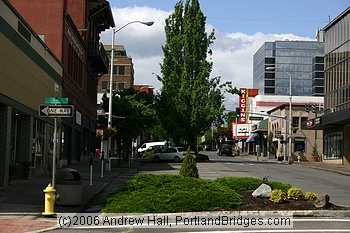
The economic development group selected a group of cities with comparable features and issues to Encinitas. Most of the cities on the list have downtowns similar to ours: open, friendly, one or two stories, lots of restaurants, cafes, and small businesses: Laguna Beach, San Luis Obispo, San Clemente, Santa Cruz, Monterey, Ventura, Redwood City, Dana Point. Some have a few three-story buildings just as we have Pacific Station and the Moonlight Lofts, but tall buildings are not a dominant or defining feature of any of the downtowns.
The only major exception on the list is Vancouver, Washington, a much larger city and a major suburb of Portland, whose downtown has a much more major commercial, less retail and restaurant focus.
So what do you want to be, Encinitas? A charming beach town or a big city? Solana Beach or Vancouver? Encinitas 101 is using your tax dollars to advocate for the latter.
Wednesday, February 3, 2021
Prop A heads to court
From the Inbox:
|
Your Proposition A Right to Vote is under attack from the building industry – and from our own Encinitas City Council.
Proposition A ("Prop A"), passed by Encinitas voters in 2013, guarantees residents a vote on zoning density and building height increases.
Recent Prop A votes included Measures T and U, two high-density housing plans that failed because they favored developers over residents and did not deliver on the promise of affordable housing. Yet our Council blames Prop A, not their failed plans, as the obstacle to complying with state law.
|
Monday, January 17, 2022
Blakespear's sudden appreciation for democracy
Mayor Catherine Blakespear stated in her Jan. 6, 2022, newsletter: “The foundation of democracy is this: eligible people must be able to vote, the votes must be counted and the results must be respected.”
Has anyone noticed the hypocrisy of our mayor? Has Mayor Blakespear “respected” the results of our local elections? (Quoted text below is from her newsletter.)
1. She promoted Measure T that contained clear language that would have removed our Proposition A right to vote on all increases in zoning density and building height that exceeds 30 feet. When Measure T was voted down by the electorate of Encinitas, she doubled down with Measure U.
2. “Our precious democracy is at a tipping point.” The mayor formed a Housing Task Force to develop a new ballot measure. Several citizens put forth ideas that residents of Encinitas would accept. None of those ideas were included. The mayor arbitrarily overrode the Planning Commission’s lower height plan. The new measure contained language that would remove our Prop A rights. Measure U did not pass.
3.“And no matter who wins, we must agree to let the winner hold the seat of power until the next election.” When Measure U failed to pass, it went to the courts. During the trial, the city argued that the citizens of Encinitas would never pass a Housing Element no matter what was presented.
4.“The delegitimizing of our elections leads people to think that violence and physically thwarting the certification process is justifiable in the name of patriotism.” The city failed to defend prop A in court, siding instead with developers in its attempt to help delegitimize Prop A. The judge gave the city council 180 days to put forth a housing plan that would satisfy state requirements, allowing the mayor to set aside our Prop A voting right for one housing cycle. Instead of creating a voter-acceptable plan, she overstepped “the seat of power” (the people) and submitted the failed Measure U to the Housing and Community Development Agency (HCD).
5. “I call on each of us to speak out and demand that our elected officials participate in our democracy with faith to the Constitution.” Has she? The mayor did not stop at just “delegitimizing” two elections. She sued her citizens to permanently remove their voting rights. The mayor claims that she was seeking clarification. But I received notice that the city had filed a suit against the supporters of Prop A, asking the court to permanently set aside our voting right. The mayor later amended that suit to replace us with HCD, a friendlier defendant. The intent was the same: remove our voting rights. Prop A supporters filed as interveners which allowed us to defend our voting rights from this “delegitimizing” attack by the mayor. The decision sided with the citizens, upholding our constitutional right to vote on all up zoning.
6. “My biggest concern is that the delegitimizing of elections that led to this attack will become more coordinated and infiltrate deeper down into our system.” Mayor Blakespear used the word “democracy” 17 times in her newsletter. Either the mayor doesn’t understand the meaning or she has revised its definition. The greatest threat to local democracy, “delegitimizing” our local elections, and restricting voter rights, is Catherine Blakespear.
Dean Turney
Leucadia
Tuesday, September 8, 2015
2016 Election Pre-game
By request.
There are a lot of interesting structural dynamics in the 2016 election. Here's how we see the players. We'll categorize them by the three local factions: Republicans, Barthists, and Prop A folks.
Kristin Gaspar (Republican): Already announced Supervisor run. Opponents are Escondido Mayor Sam Abed and incumbent Dave Roberts (or a Democratic replacement if Roberts doesn't recover from the hostile work environment and improper use of taxpayer funds scandals). Gaspar is thus likely out of Encinitas politics unless she fails to make the top two in the June Supervisor primary and then announces she'll seek re-election.
Catherine Blakespear (Barthist): Likely to run for Mayor from her safe council seat (as Tony Kranz did in 2014). May not face a serious challenger because most other candidates would find it easier to win a council seat.
Tony Kranz (Barthist): Will run for re-election unless he moves out of state. Likely to win due to large number of open seats (4 if Blakespear wins Mayor seat) and likely weak field.
Mark Muir (Republican): Likely to run for re-election, won't challenge Blakespear for Mayor because it would a lot riskier than running for council. Likely to win re-election.
Lisa Shaffer (Barthist): Has said she wouldn't run again, but don't count on it.
Paul Gaspar (Republican): Seems politically ambitious and could probably win a council seat given his name recognition and fundraising ability.
Sheila Cameron (Prop A): Won't run again.
Julie Graboi (Prop A): Seems inclined not to run, but would be among the stronger Prop A candidates due to name recognition and practice on the campaign trail. Remember, Tony Kranz got elected on his second try.
Al Lerchbacker (Republican): Hasn't been seen much since failed 2014 campaign, so it's unclear whether he's still interested. However, with party backing and an earlier start and easier field this time, could probably win a seat.
So at this point we'll pencil in Blakespear for Mayor, Kranz and Muir to keep their council seats, and two other seats up for grabs.
We can think of several other Barthists who might run: the "Engage Encinitas" women and a traffic commissioner or two. We're not aware of any other Prop A folks getting ready to run. What have you heard?
UPDATE: Welcome former Sierra Madre Smart Growther Councilman Joe Mosca to the race!
UPDATE 2: Apparently the rules are such that if Blakespear wins Mayor and thus vacates her council seat, the seat does not go to the fourth-place vote getter, but is appointed by the council. The vacancy wouldn't occur until the new mayor is seated, so presumably the new council is the one to make the appointment. If Mosca wins, the Barthists would have a 3-1 majority and make an appointment to give themselves a 4-1 supermajority (which could resurrect the Barth-Shaffer-Kranz sales tax increase). If Lerch or another Republican wins, we'd have a 2-2 stalemate which could lead to the appointment of an independent, non-partisan compromise candidate.
Monday, September 30, 2019
City Sues Citizens
On
September 6 the City of Encinitas filed a lawsuit against Encinitas residents,
naming 100 [John] DOEs as defendants along with “other unknown persons or
entities claiming any interest in the subject of this litigation as DOE
defendants.” At Council direction, the
City is effectively suing its own residents for their participation in Proposition
A “Right to Vote Initiative” (Prop. A), Measure T, and Measure U elections.
The City seeks to overturn the results of the 2013 election that passed Prop. A and replace the current requirement for voter approval of Housing Element Updates (HEU) with a simple Council majority. These required updates represent the bulk of all upzoning in Encinitas.
Citing the failures of Measures T and U, the City claims that Prop. A interferes with its ability to comply with state housing law. Residents who voted against Measures T and U maintain that the City far exceeded State housing requirements in its desire to provide maximum profits to developers. Voters viewed these measures as gifts to developers and the reason for their majority No votes. Examples of these gifts included: low percentage of affordable housing; Prop. A nullification clauses; and greater building heights than necessary.
The City further alleges that it negotiated Measures T and U with HCD (Department of Housing and Community Development) yet despite claims of transparency failed both times to provide requested verification to the public of such negotiations through minutes, emails, and recordings. The City also maintains that it considered resident input in crafting Measures T and U; however, no proof of this input having been incorporated is evident in either plan.
Prop. A was a single issue Special Election with 12,873 people taking part in the vote. It is unclear from the lawsuit how many of the people who participated in the Prop. A, Measure T, and Measure U elections are named in the lawsuit.
Click the link to view the lawsuit: Complaint for Declaratory Relief
Friday, October 3, 2014
GOP dumps Ziegler over Prop A position
In yet another sign of San Diego County Republican Party disarray under the erratic leadership of Tony Krvaric, the party has apparently just dumped its endorsed candidate for Encinitas City Council, Bryan Ziegler. Sources tell Encinitas Undercover the split was over Ziegler's support for Proposition A, the voter initiative passed in 2013 that requires voter approval of land zoning changes.
The party web site now shows an endorsement for newcomer Alan "Lerch" Lerchbacker, who has no significant organization and little name recognition or history of community involvement. Lerchbacker is expected to place third at best, behind two Democrats. The seat should have been a great opportunity for the GOP, with a conservative tilt in an off-year election in a competitively split city. Even more so because the Democrats have split into two factions, the Community Character / Prop A faction represented by Julie Graboi, and the Establishment / Smart Growth faction represented by Catherine Blakespear.
The County GOP's beef with Prop A is bizarre for two reasons. First, it already passed, making a candidate's support or opposition of it largely irrelevant (other than as an indication of a candidate's overall views on development issues and how likely the candidate might be to work to undermine Prop A around the edges). But secondly and more importantly, Prop A is entirely consistent with the professed GOP principles of property rights and limited government. It preserves current property rights and zoning, and prevents politicians from upzoning their cronies' properties at the expense of the neighbors' quality of life and property values. How could a limited-government party oppose that, unless the party was controlled by those very cronies and developers?
Tuesday, March 25, 2014
Staff claims Prop A height limits are a mere suggestion, city can override them at will with discretionary waivers
Can you believe the nerve of these guys?
Tomorrow's agenda FAQ's:
PROP A SET NEW HEIGHT LIMITS OF TWO STORIES OR 30 FEET, CAN A DEVELOPER PROCESS A WAIVER FROM THIS STANDARD?From the Inbox:
Yes. A height limitation qualifies as a development standard for which a developer may request a waiver.
Government Code 65915(o)(1)
Prop A is not a "development standard," but a general amendment enacted by the voters, not the city, that requires a public vote for any structure over 30 feet, and that is not something the city can get around. The only way to eliminate the Prop A requirements is through another vote of the people.Can there now be any doubt that staff's #1 priority is to force high-density development on Encinitas against the will of the residents? And whose side are your council representatives on, staff's or the public's?
Sunday, May 5, 2013
Barth Afraid to State the Negative Consequences?
After a couple weeks of being strung along, Barth is still not willing to
state what she currently sees as the negative consequences of Prop A. She has
made public statements that seem to indicate that she's backing off of some,
but which ones she hasn't stated.
Which consequence is actually an unintended negative consequence?
Which "issue" is genuine, and not manufactured? Which issue is
actually a consequence?
Doesn't the public have a right to know this before they vote?
This council allowed an ambiguous and suspect report on Prop A to become the
official word on Prop A and they signed a ballot statement that they don't want
or can't defend. This does not facilitate an open public dialogue. Instead it
helped kick up a lot of dust.
Was that on purpose? Well, Barth not being
willing to lay it out doesn't give me much confidence that she is going to help
clear out the dust. Is it because she doesn’t want to be open with the public? She
can fix that in five minutes by emailing her list of negative consequences.
So, why won't Barth answer? Right now Barth forces us to guess. Why did Barth
initially offer excuses that were highly questionable and inconsistent? Barth
has been trying to play both sides on this (and many other issues). In this case,
she made the statement in her mass mailing that said that Prop A had negative
consequences. I asked Barth what SHE saw as the NEGATIVE consequences. She
refuses to answer.
I will pay the first person $100 (or donate to a charity on their behalf) if
they get Barth to list the negative consequences of Prop A, in writing, this
week.
Here is her personal contact
info:
/http://barthforencinitas.com/
Don't email her on her city mail. If you correspond on her city email she
will have to restrict responses to being completely factual or risk being
seen as advocating using city resources.
Thursday, May 23, 2013
Are you an unwitting opponent of Prop A?
Sources tell Encinitas Undercover that at least three people on this list of alleged "Encinitas Residents Opposing Prop A" do not oppose Prop A, and, in fact, one alleged opponent actually circulated Right to Vote petitions and currently proudly sports a Prop A yard sign.

It is clear that Very Bad People with Very Big Money will say and do Very Bad Things to defeat Prop A.
If they are successful with the assist from your City Council, what will your City Council do to "honor the spirit of Prop A" and stop Encinitas from turning into Manhattan Beach without voter approval?
Wednesday, June 5, 2013
Taxpayer funds buying political support for No on A?
From the inbox:
And Councilman Muir's crass, stupid questioning of the associations about their positions on Prop A during the discussion of their receiving city funds adds a lot of weight to the appearance of corruption.
The city's incestuous relationship with the associations does raise eyebrows and creates the opportunity for, and the appearance of, corruption. City funds should not go to private business groups in the first place.ENCINITAS CITY COUNCIL ---- Using Power on City Business Associations?
Money talks?
While the City Council is determined to defeat Prop A, the Right to Vote Initiative, should they ask that the city business associations take a position on Prop A?
Encinitas has four city business associations and three of them currently receive taxpayer funded support in the total amount of $70,000 from the City Council. The Chamber of Commerce hasn’t received city support money for the last 3 or 4 years. At one time the Chamber had received up to $90,000 a year. According to the Chamber representative, the Chamber has a debt that should be paid off by October.
At the March 27, 2013 Council meeting the associations, which are the Downtown Encinitas Merchants Association (DEMA), Leucadia101, Cardiff 101, and the Encinitas Chamber of Commerce presented a report on their accomplishments. It was agenda item #4.
It was at the end of the presentation that Councilman Mark Muir, the retired fire chief, asked a question of the representatives that was completely unrelated to the agenda item.
Approximately 1:31:47 into the video of the meeting, Councilman Muir asks the representatives – Have you taken a position on a vote on the initiative coming up is the first question and second if you haven’t are you going to?
Each association representative goes to the microphone and answers Councilman Muir’s question that it will be discussed at the board meeting.
The Downtown Encinitas Merchants Association (DEMA) receives $20,000. Cardiff101 receives $20,000. Leucadia101 receives $30,000. On the May 22 Council meeting was a funding request for the Council to give $20,000 to the Chamber of Commerce. This vote was delayed.
With the exception of the Cardiff101 association, the other three boards, DEMA, Leucadia101, and the Chamber of Commerce voted to support the City Council’s No on A position.
And Councilman Muir's crass, stupid questioning of the associations about their positions on Prop A during the discussion of their receiving city funds adds a lot of weight to the appearance of corruption.
Saturday, November 2, 2019
It's wrong for a city to sue its citizens, using their money
Mark Muir in Encinitas Current:
Last December, Superior Court Judge Ronald Frazier overturned [sic; he suspended it, not overturned it] citizen-driven and voter-approved Proposition “A”, known as the “Encinitas Right to Vote Initiative”. Proposition “A” gives Encinitas residents the right to vote on housing projects that include significant density increases and/or building heights greater than two stories. The court demanded that Prop. “A” requirements be overlooked for this housing cycle and ordered the City to adopt a legally compliant housing plan immediately. The ruling came as a direct result of the voters’ consistently rejecting the City Council’s site selections to upzone (i.e., increase density) in order to meet state growth requirements.
It is important to note that the ruling did not order the City to specifically implement either Measure “U” or “T”, the voter-rejected housing plans put forth in 2016 and 2018.
Instead of honoring Encinitas citizens by appealing the judge’s decision (a viable option), the Mayor and City Council rushed to approve the most recent voter-rejected housing plan, Measure “U”. To make matters worse, the Council also filed a lawsuit against their own citizens in order to seek judgment (Declaratory Relief) on whether they follow Prop. “A” voter requirements in the future.
It’s wrong for a City to sue its citizens and it’s even worse to do it with their own money! As a vocal supporter of both housing measures, I’ve always believed residents should have the final say on critical housing plans that are to serve as a blueprint for all future development. If the court decision is unfavorable to our citizens, nothing prevents the City from holding an advisory vote to honor the intent of Prop “A” and the will of the people.
Friday, August 8, 2014
William Morrison makes four
Coast News:
On Prop A, we don't know his position, but we do have this in a letter from Fred Caldwell to the Coast News:
UPDATE: Former mayor, regular city warchdog and critic of Gus Vina, and Prop A campaigner Sheila Cameron runs for mayor! And Morrison hadn't turned in his papers yet the last time the U-T checked late in the afternoon.
William Morrison, the vice president of the Leucadia 101 Main Street Association and Bryan Ziegler, a deputy county counsel who ran for a city council seat in 2012, pulled nomination papers this week, according to the City Clerk’s office.Morrison is a longtime leader of Leucadia 101, which has been consistently pro-Streetscape, so if you're among the anti-roundabout gang, he's not for you. Here is an anonymous and pointedly opposing view of his May 28, 2014 L101 presentation before council. You may wish to view the video of that meeting on the city's web site to get an unfiltered measure of Mr. Morrison (nevertheless, I do think this new citizen reporting of council meetings on EU is quite helpful in pointing us to that presentation!).
[...]
Morrison, according to biographical information on the Main Street website, is a licensed architect who currently serves as the group’s economic development chair.
On Prop A, we don't know his position, but we do have this in a letter from Fred Caldwell to the Coast News:
EncinitasHOPE.com with disregard for the truth and without permission used our L-101 logo to push their agenda against Prop A on their recently printed literature sent to many residents. Likewise, encinitasHOPE.com uses “Leucadia Main Street Association” deceitfully on their website to garner votes against Prop A. They have since been asked to cease to do so by our president, William Morrison and irrespectively have not ceased as of the date of this email to The Coast News.Welcome to the mix, Mr. Morrison. We look forward to learning more about your positions.
UPDATE: Former mayor, regular city warchdog and critic of Gus Vina, and Prop A campaigner Sheila Cameron runs for mayor! And Morrison hadn't turned in his papers yet the last time the U-T checked late in the afternoon.
Subscribe to:
Posts (Atom)